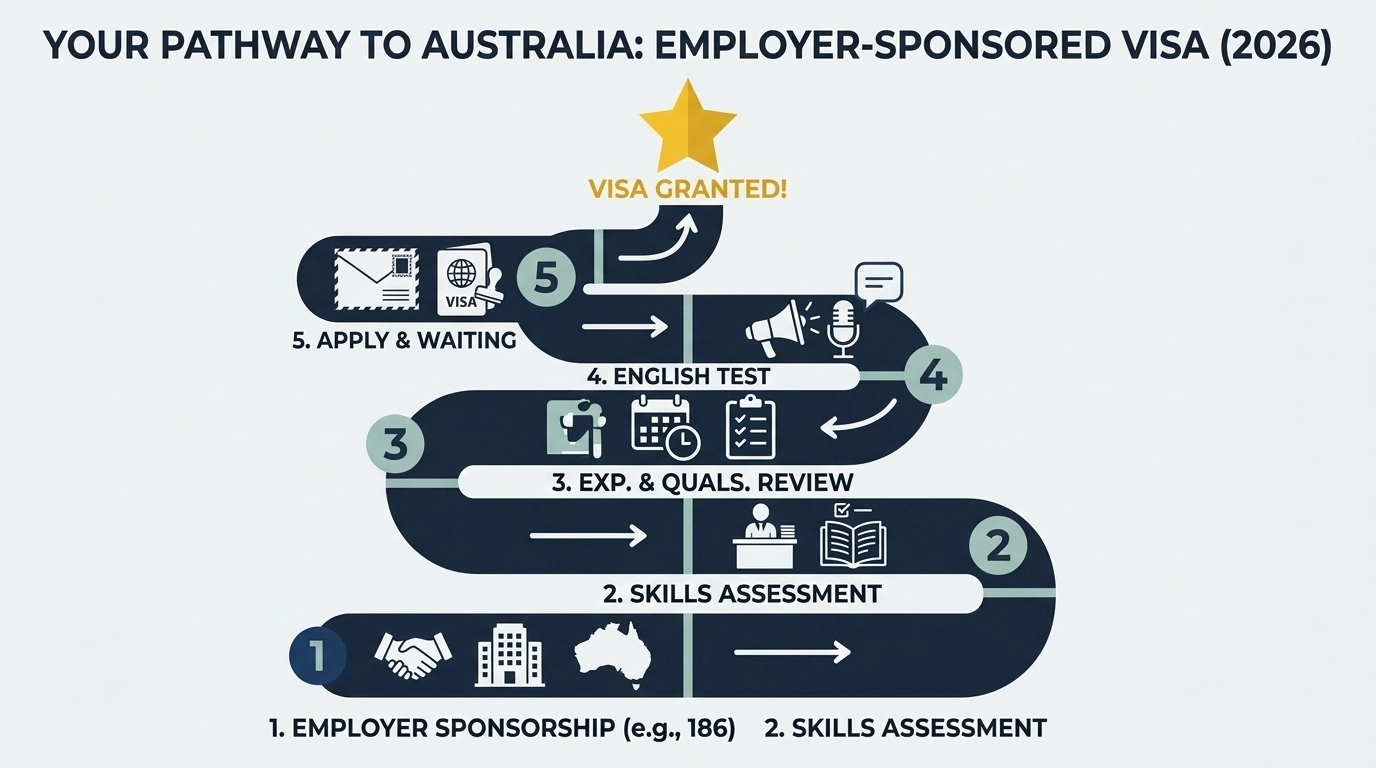
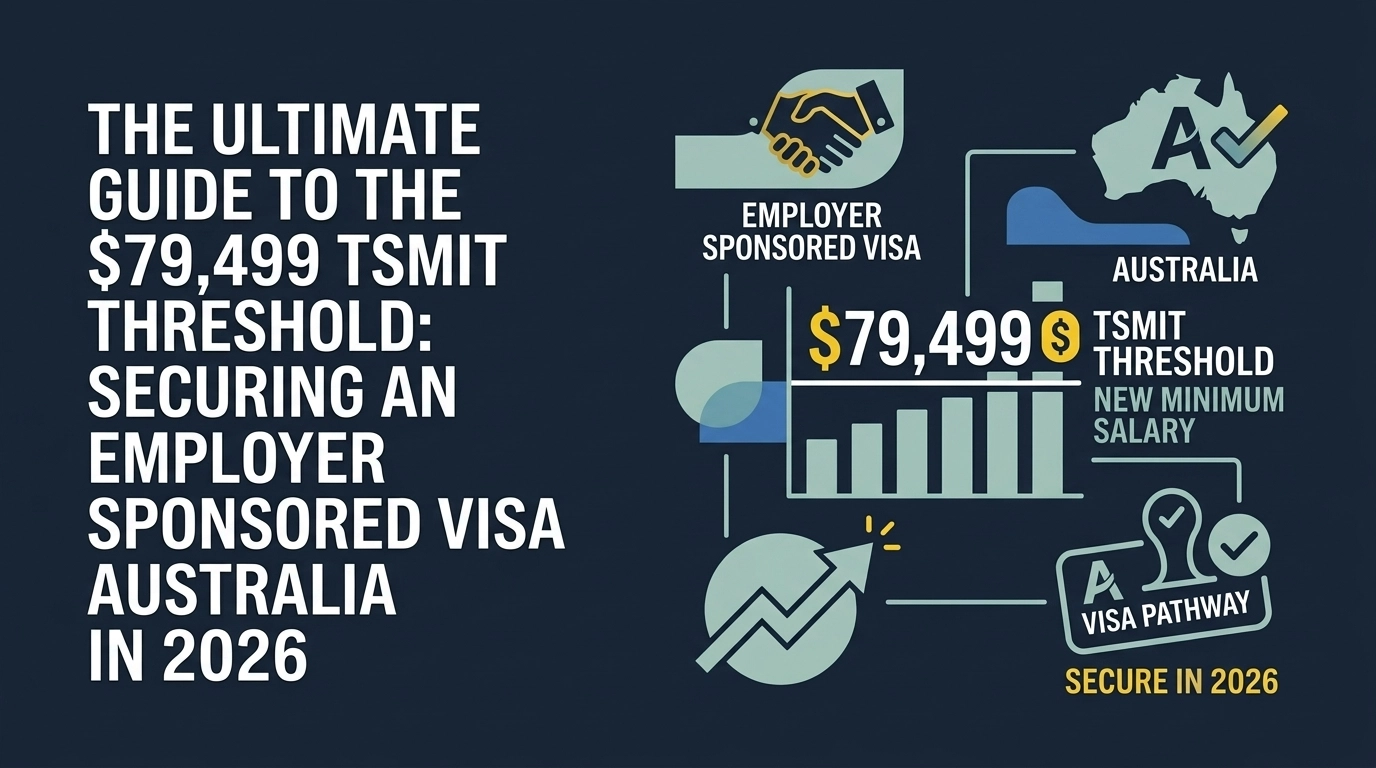
Australia’s migration landscape is undergoing its most significant transformation in a decade. As of April 2026, the Department of Home Affairs has solidified the next phase of its migration strategy, centering on higher wage floors and more rigorous standards for skilled workers.
The most critical update for both international professionals and Australian businesses is the increase of the Temporary Skilled Migration Income Threshold (TSMIT) to $79,499, effective from 1 July 2026.
If you are currently navigating the requirements for a 482 visa Australia or planning an employer sponsored visa Australia application, this change is a game-changer. This guide provides a strategic roadmap to ensure your eligibility remains intact as the goalposts move.
What is TSMIT and Why is it Changing?
The Temporary Skilled Migration Income Threshold (TSMIT) is the minimum salary an employer must pay to sponsor a worker on a temporary skilled visa. For over ten years, this figure was frozen at $53,900, creating a significant gap between the migration system and the actual cost of living in Australia.
Starting in 2023, the Australian government introduced a phased indexation framework. The goal is simple: to ensure that skilled migration benefits the Australian economy without undercutting local wages. By raising the threshold to $79,499, the government is signaling that "skilled migration" should be reserved for roles that command a mid-to-high professional salary.
The 2026 Threshold Breakdown
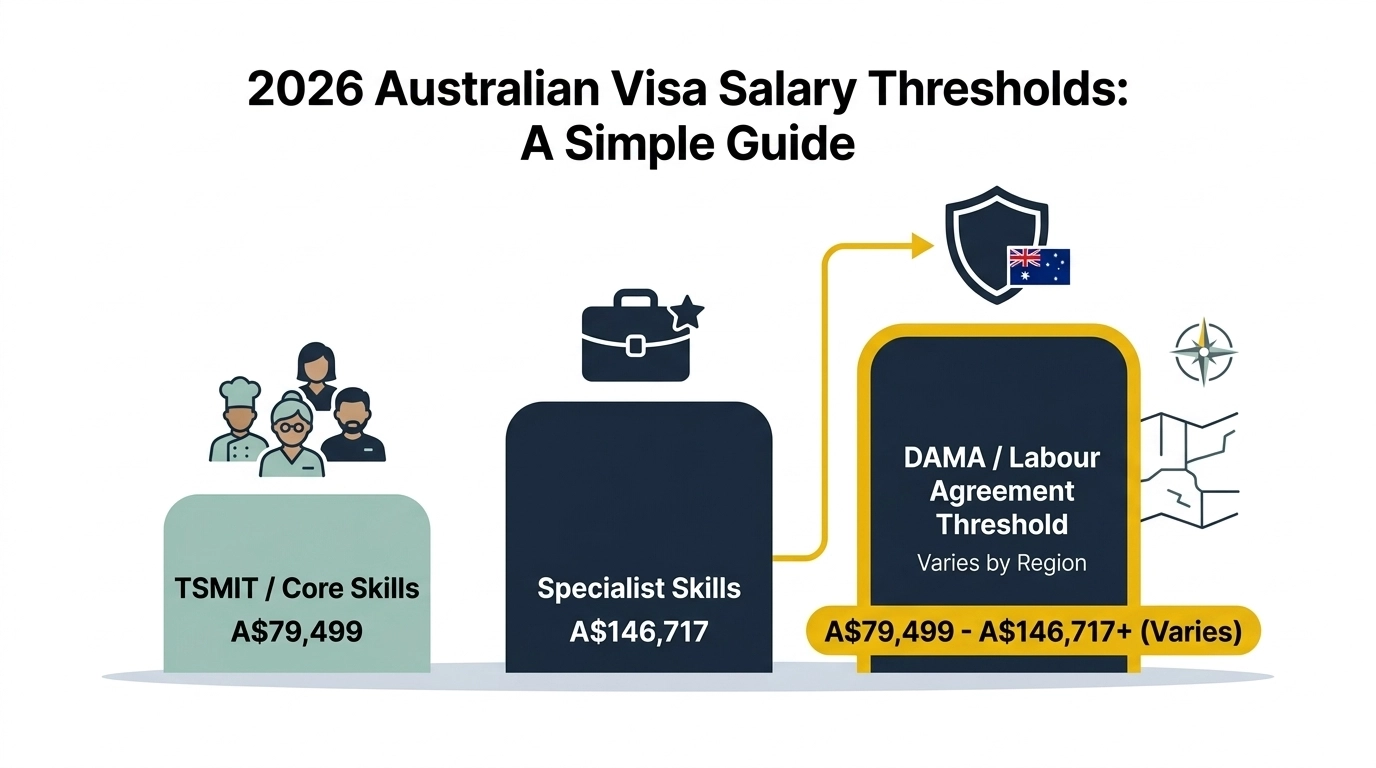
From 1 July 2026, the migration system will operate under three primary income tiers. Understanding where your role sits is the first step in your application strategy.
| Threshold Category | Income Level (from 1 July 2026) | Primary Visa Focus |
|---|---|---|
| TSMIT / Core Skills (CSIT) | $79,499 | Standard 482 and 186 nominations |
| Specialist Skills (SSIT) | $146,717 | High-level executives and niche tech roles |
| DAMA / Labour Agreements | Varies by region | Lower thresholds for specific regional areas |
Impact on the 482 Visa Australia
The Temporary Skill Shortage (subclass 482) visa remains the primary vehicle for employer sponsorship. However, the $79,499 floor creates a new barrier for entry-level professional roles or roles in lower-paying industries.
1. The "Hard" Salary Floor
If your proposed salary is even one dollar below $79,499 after 1 July 2026, your nomination will likely be refused unless you fall under a specific labor agreement or DAMA pathway. This "hard floor" applies to the base salary (excluding superannuation).
2. The Market Salary Rate (AMSR) Requirement
It is not enough to simply meet the $79,499 threshold. Employers must also prove the Annual Market Salary Rate (AMSR). This means if an Australian citizen doing the same job in the same location earns $95,000, the sponsor must pay the overseas worker $95,000, not the TSMIT minimum of $79,499.
3. Renewal Risks for Existing Holders
If you are currently on a 482 visa and your salary is $74,000, you are compliant today. However, if you need to renew your visa or transition to a different employer after July 2026, your salary must be adjusted upward to meet the new $79,499 requirement. Failure to index salaries can lead to visa cancellations or failed renewals.
Moving to Permanent Residency: The 186 Visa
For many, the 482 visa is simply a stepping stone toward the Employer Nomination Scheme (subclass 186) visa. The increase in TSMIT directly impacts the transition to PR.
To be eligible for the 186 visa (Transition stream), your employer must demonstrate that the role is viable and that the salary meets current standards. If your industry has seen stagnant wage growth, reaching the nearly $80,000 mark may be a challenge for some small businesses.
Pro-Tip: Use the OzJobList Pathway Pivot Engine to assess if your current role and salary trajectory align with these new PR requirements.
Strategic Timing: The July 1 Deadline
Timing is the most powerful tool in your migration strategy. Because these changes take effect on 1 July 2026, the second quarter of the year (April, May, and June) is a critical "window of opportunity."
Lodging Before the Increase
If you lodge a nomination before 1 July 2026, the current threshold of $73,150 will apply to that application. For employers who cannot immediately afford the jump to $79,499, lodging the application in the coming weeks is essential.
If you are an applicant:
- Ensure your skills assessment is finalized immediately.
- Check your occupation against the ANZSCO list to ensure your role hasn't been reclassified.
- Request your employer to lodge the nomination by mid-June to avoid the end-of-financial-year system congestion.
If you are an employer:
- Audit your current sponsored workforce.
- Review employment contracts to include clauses regarding mandatory salary indexation.
- Prepare for the increased Temporary Graduate Visa (Subclass 485) fees which rose to $4,600 earlier this year, as this affects your talent pipeline.
For Employers: Ensuring Compliance
The Department of Home Affairs and the Australian Taxation Office (ATO) have increased data-sharing capabilities in 2026. Non-compliance with salary thresholds is easier than ever to detect.
Step-by-Step Compliance Checklist:
- Annual Salary Review: Compare all sponsored staff against the $79,499 mark.
- Market Research: Document how you determined the AMSR using job advertisements or salary surveys.
- Superannuation Clarity: Remember that the $79,499 threshold is exclusive of the Superannuation Guarantee. Ensure your offer letters reflect this distinction clearly.
- Registration: If you are a new business looking to sponsor, ensure you register on OzJobList to connect with pre-vetted, skilled candidates who understand these requirements.

Navigating Challenges: What if the Salary is Too High?
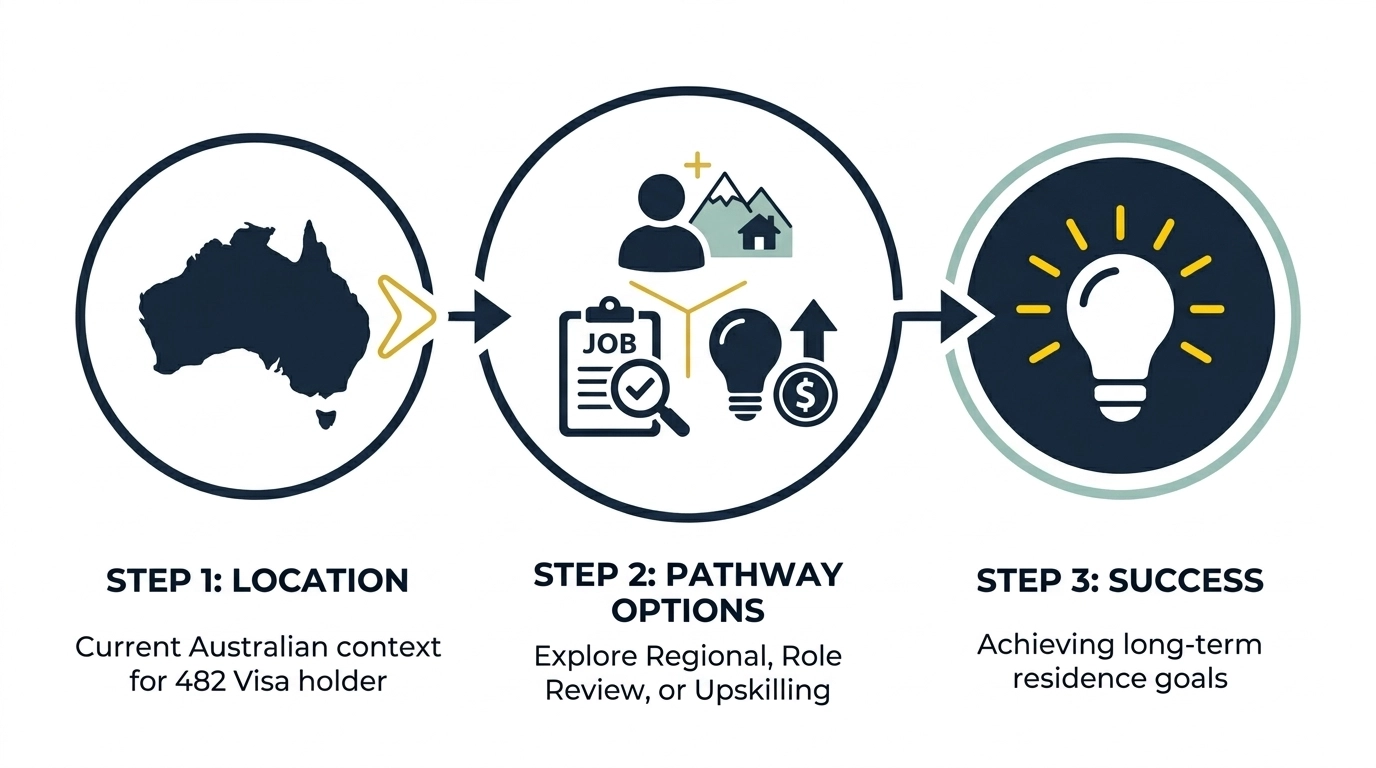
If your role typically pays between $65,000 and $75,000, reaching the new TSMIT may seem impossible. However, you have options:
- Regional Migration (DAMA): Designated Area Migration Agreements often allow for a "TSMIT concession," letting employers sponsor workers at a lower salary (usually a 10% reduction) if they are located in regional Australia.
- Role Re-evaluation: You may be performing duties that align with a higher-level ANZSCO code. For instance, moving from a "General Clerk" to a "Project Coordinator" role could justify the necessary salary increase.
- Upskilling: Use this time to gain certifications that increase your market value to the $80,000+ bracket. Check our Resource Hub for tips on career advancement.
The Broader Context: A More Expensive System
It is worth noting that the TSMIT isn't the only thing getting more expensive. In March 2026, the application fee for the Subclass 485 (Graduate) visa jumped to $4,600. This indicates a broader government trend: Australia is prioritizing "high-value" migration.
To succeed in this environment, you need to be more than just a skilled worker; you need to be a strategic worker. This involves staying updated on policy changes and ensuring your resume is optimized for the Australian market. Use our Free Resume Generator to tailor your application to the standards Australian sponsors expect in 2026.
Summary Checklist for 2026 Applicants
- Identify your tier: Does your role fall under Core Skills ($79,499) or Specialist Skills ($146,717)?
- Check the date: Can you lodge before 1 July 2026 to lock in the lower rate?
- Verify AMSR: Is your salary not only above TSMIT but also equal to what Australians earn in that role?
- Consult the experts: Reach out to us via our Contact Page or visit our FAQ for more specific queries.
Securing an employer sponsored visa Australia in 2026 requires more preparation than in previous years. By understanding the $79,499 threshold now, you can position yourself: or your business: to thrive in this high-standard migration environment.
Ready to start your journey? Read our Ultimate Guide for Skilled Migrants to stay ahead of the curve.